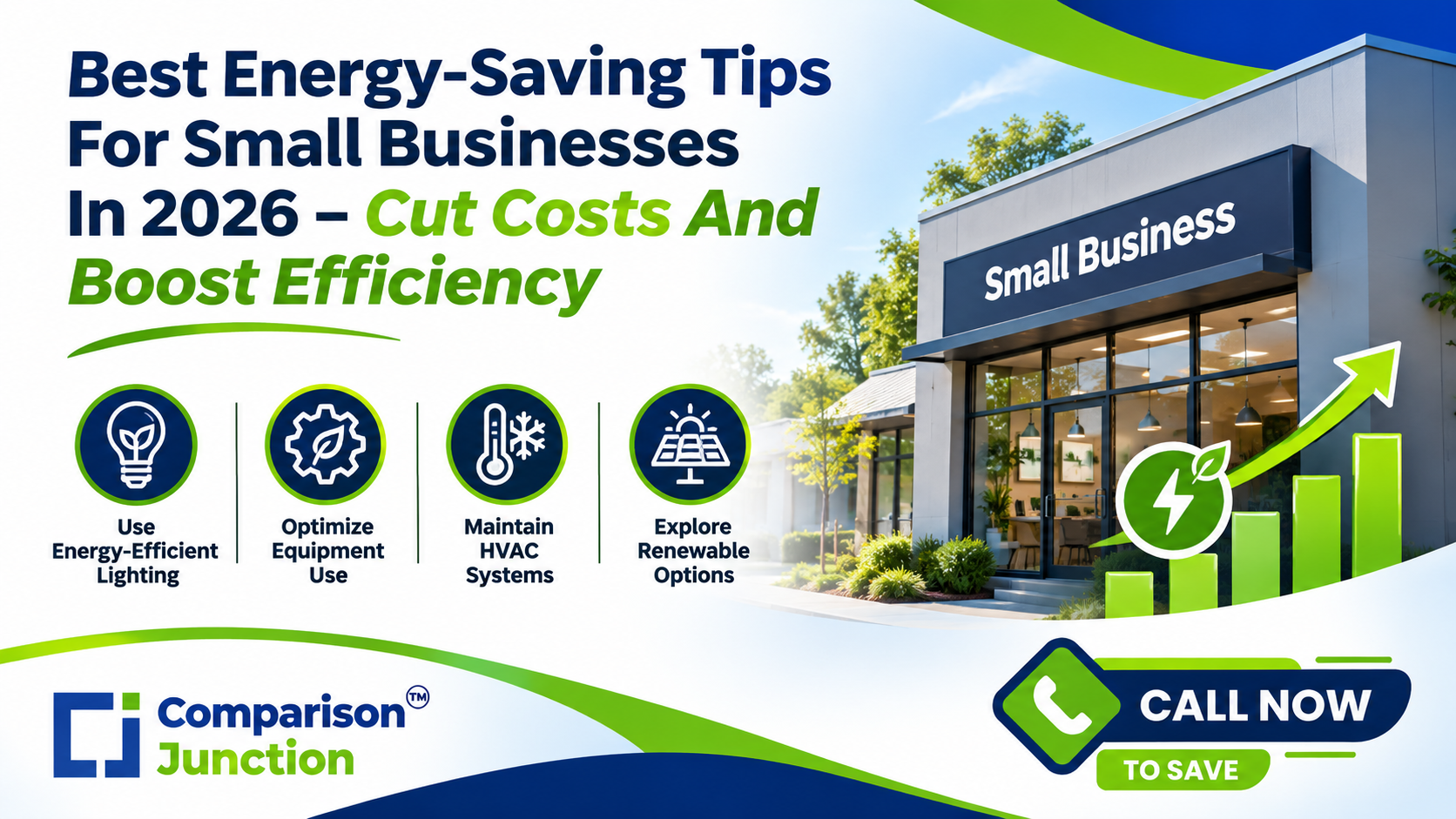
Running a small business in 2026 means managing rising operating expenses while staying competitive. From retail stores and restaurants to offices and service businesses, electricity costs can significantly affect your bottom line. The good news? Implementing the best energy-saving tips can help reduce utility bills, improve workplace efficiency, and support a more sustainable business.
At Comparison Junction, we help businesses compare available solutions and make informed decisions. Here are practical energy-saving strategies, their pros and cons, estimated costs, and ways to identify the right options for your business.
Upgrade To Energy-Efficient LED Lighting - Lighting is an easy place to start. Replacing traditional incandescent bulbs with LED lighting can reduce lighting energy consumption by approximately 75% or more, depending on the bulbs being replaced. LEDs also last longer, reducing maintenance and replacement expenses.
Advantages -
Lower electricity consumption.
Longer lifespan and fewer replacements.
Less heat generation than traditional bulbs.
Disadvantages -
Higher upfront costs than basic incandescent bulbs.
Some fixtures may require compatible replacements or installation.
Estimated Pricing - LED bulbs typically cost $2 to $15 each, while larger commercial lighting upgrades can cost several hundred to several thousand dollars, depending on the building.
Optimize Heating and Cooling Systems - Heating, ventilation, and air conditioning (HVAC) systems can consume a substantial amount of energy. Schedule regular maintenance, clean filters, seal air leaks, and adjust thermostat settings to match occupancy.
A programmable or smart thermostat can automatically change temperatures outside business hours. Businesses with suitable HVAC equipment may also benefit from high-efficiency system upgrades.
Advantages -
Can lower heating and cooling expenses.
Improves indoor comfort.
Helps prevent unnecessary equipment operation.
Disadvantages -
Equipment upgrades can be expensive.
Savings depend on climate, insulation, usage, and existing equipment.
Estimated Pricing - Programmable thermostats generally cost $20 to $100, while smart thermostats often cost $80 to $300 or more, excluding installation. Commercial HVAC upgrades may cost thousands of dollars.
Invest In Smart Power Management - Computers, printers, chargers, display screens, and other electronics can consume electricity even when employees are not actively using them. Enable power-saving settings, switch off unused equipment, and install smart power strips where appropriate.
Create an end-of-day shutdown checklist to ensure nonessential equipment is turned off.
Advantages -
Affordable and straightforward to implement.
Reduces unnecessary electricity use.
Encourages energy-conscious employee habits.
Disadvantages -
Requires consistent employee participation.
Essential equipment must remain powered when needed.
Estimated Pricing - Basic power strips typically cost $10 to $30, while smart power strips may cost $20 to $60 or more.
Compare Business Electricity Plans - Depending on your location and utility market, comparing electricity providers or rate plans may reveal opportunities to reduce energy expenses. Review the price per kilowatt-hour (kWh), monthly fees, contract length, renewal terms, and early termination charges.
Some businesses may qualify for time-of-use rates, which charge different prices at different times of day. These plans can be beneficial if your business can shift energy-intensive activities to cheaper periods.
Advantages -
Potential savings without replacing equipment.
Helps identify competitive rates and contract terms.
May provide more predictable energy costs with suitable plans.
Disadvantages -
Availability varies by state and utility territory.
Promotional rates can increase after an introductory period.
Switching plans does not guarantee lower bills.
Estimated Pricing - Electricity rates vary by location, provider, and contract. Compare your current rate with written offers rather than relying on advertised starting prices.
Improve Insulation and Reduce Air Leaks - Poor insulation and gaps around doors and windows allow conditioned air to escape. Weatherstripping, door sweeps, window sealing, and suitable insulation improvements can help your HVAC system work more efficiently.
Prioritize areas where employees or customers frequently enter and exit, as well as spaces with noticeable drafts.
Advantages -
Can improve comfort throughout the year.
Reduces heating and cooling waste.
Some improvements are inexpensive DIY projects.
Disadvantages -
Larger insulation projects require an upfront investment.
Results depend on building conditions and local weather.
Estimated Pricing - DIY weatherstripping may cost $10 to $50, while professional insulation projects can cost hundreds to several thousand dollars.
Consider Solar Energy And Energy Audits - Solar panels may help businesses reduce grid electricity purchases, especially when daytime operations align with solar production. However, installation costs, roof condition, local incentives, and financing terms should be evaluated carefully.
A professional energy audit can identify where your business wastes the most energy before you invest in major upgrades.
Advantages -
Solar may reduce long-term electricity expenses.
Audits help prioritize high-impact improvements.
Some projects may qualify for local incentives or financing.
Disadvantages -
Solar requires significant upfront investment or financing.
Savings depend on sunlight, tariffs, and system performance.
Incentives and eligibility rules vary.
Estimated Pricing - Small-business energy audits may range from free utility assessments to several hundred or several thousand dollars for detailed commercial audits. Commercial solar projects can cost tens of thousands of dollars or more before applicable incentives.
How Much Can Your Business Save?
Your savings depend on current electricity usage, local rates, building efficiency, and the improvements you choose. Start by reviewing 12 months of utility bills, identifying energy-intensive equipment, and implementing low-cost changes first.
Next, compare electricity plans and obtain multiple written quotes for larger projects. Track monthly kWh consumption and utility expenses to measure whether each improvement is delivering results.
Find Energy-Saving Options Using Comparison Junction
Ready to explore energy-saving opportunities for your small business? Comparison Junction can help you organize your research and compare available options before making a decision. Check provider eligibility, contract details, installation costs, and potential incentives before committing.
Use the ZIP code form below to begin exploring options available in your area.
Explore With UsConsult Our Energy Specialists Today
Speak to our business energy experts at +1-844-678-6868 and get the best rates right away.