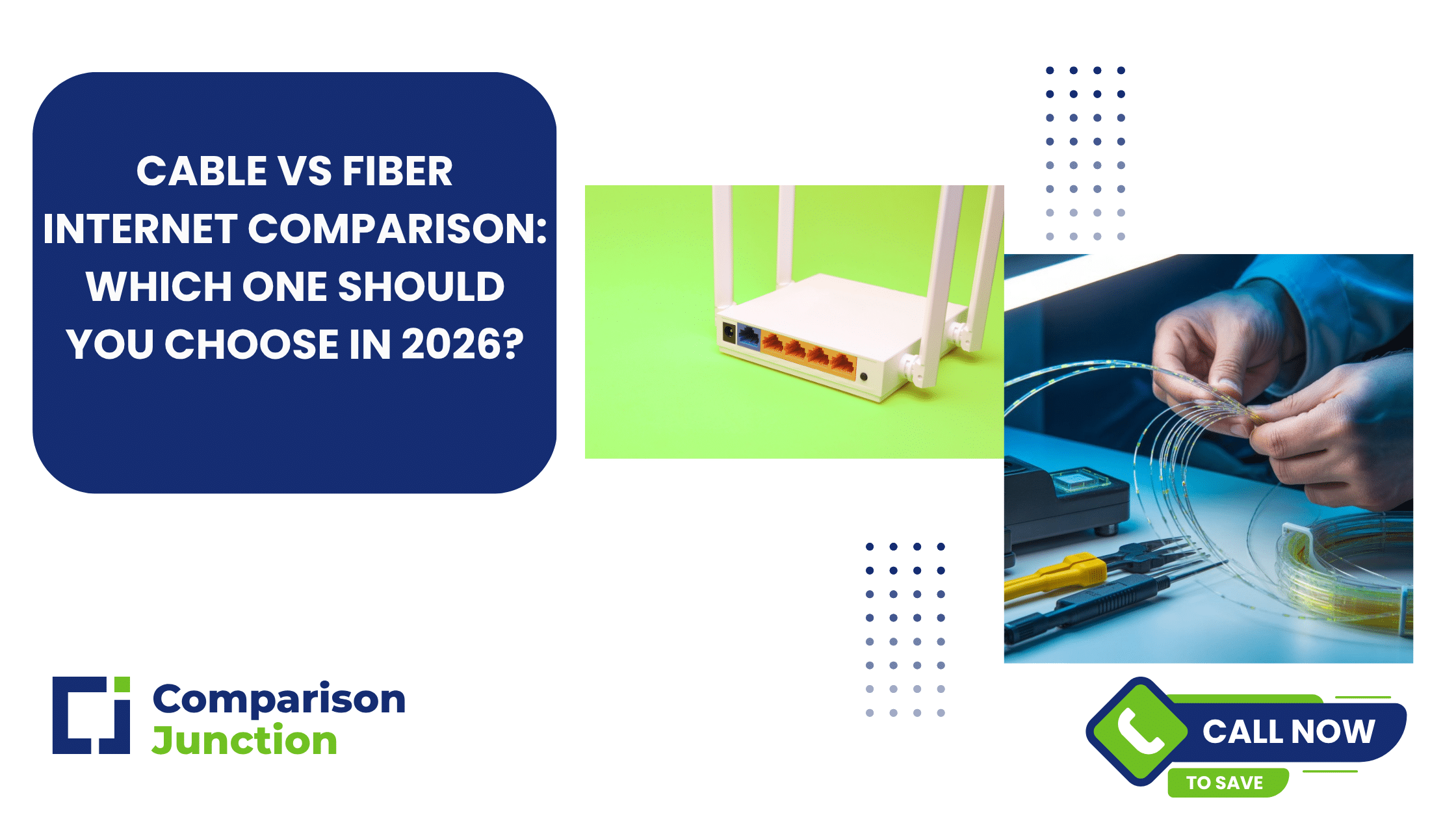
When choosing an internet connection for your home or business, understanding the cable vs fiber internet comparison is essential. Both technologies offer high-speed internet, but they differ in performance, reliability, pricing, and availability. In this guide, we break down everything you need to know so you can make an informed decision.
Cable vs Fiber Internet Comparison As On April 2026
| Feature | Cable Internet | Fiber Internet |
| Technology | Coaxial cable (same as cable TV) | Fiber-optic cables (light signals) |
| Speed Range | 25 Mbps to 1 Gbps | 100 Mbps to 5 Gbps+ |
| Upload Speeds | Slower (5–50 Mbps) | Symmetrical (same as download speed) |
| Latency | Moderate | Very low |
| Reliability | Affected by network congestion | Highly reliable |
| Availability | Widely available | Limited but growing |
| Cost | Generally cheaper | Slightly more expensive |
Pros & Cons Of Cable & Fiber Internet
- Advantages Of Cable Internet
- Widely available in urban and suburban areas
- Lower upfront costs
- Easy installation using existing infrastructure
- Suitable for streaming, browsing, and casual gaming
- Disadvantages Of Cable Internet
- Speeds can slow during peak hours (shared bandwidth)
- Lower upload speeds
- Higher latency compared to fiber
- Performance varies by neighborhood
- Advantages Of Fiber Internet
- Ultra-fast speeds, ideal for heavy users
- Symmetrical upload and download speeds
- Low latency for gaming and video calls
- More reliable and less prone to outages
- Disadvantages Of Fiber Internet
- Limited availability in many regions
- Higher installation costs in some areas
- Slightly more expensive monthly plans
- May require new infrastructure setup
Pricing Information As On April 2026
Pricing is a major factor in the cable vs fiber internet comparison. Here’s what you can typically expect:
- Cable Internet Pricing
- Basic plans: $30–$50/month (up to 100 Mbps)
- Mid-tier plans: $50–$80/month (200–500 Mbps)
- High-speed plans: $80–$120/month (up to 1 Gbps)
Cable providers often bundle internet with TV or phone services, which can reduce overall costs.
- Fiber Internet Pricing
- Entry-level plans: $50–$70/month (100 to 300 Mbps)
- Mid-tier plans: $70–$100/month (500 Mbps to 1 Gbps)
- Premium plans: $100–$150/month (2 to 5 Gbps)
Fiber plans may appear more expensive, but they offer better performance and value for high-demand users.
Which One Should You Choose?
Choosing between cable and fiber depends on your usage:
- Choose Cable Internet if - You want affordable internet for everyday use like browsing, streaming, and social media.
- Choose Fiber Internet if - You need high-speed, reliable internet for gaming, remote work, 4K streaming, or smart homes.
For households with multiple users and devices, fiber is often the better long-term investment.
Check Availability in Your Area
To discover the most accurate and affordable options available in your area, enter your ZIP code below:
Enter your ZIP code to compare
Need Help? Speak To Our Experts
Still confused about cable and fiber internet? Our experts are here to help you compare plans and schedule installation quickly.
Reach Out To Us At - +1-844-678-6868
In this cable vs fiber internet comparison, both options have their strengths. Cable internet is affordable and widely accessible, making it a solid choice for most households. On the other hand, fiber internet delivers unmatched speed and reliability, making it ideal for power users and future-proof connectivity.
As fiber networks continue to expand, more users are making the switch for better performance. However, the best choice ultimately depends on your budget, availability, and internet needs.
Take the next step today, compare plans, check availability, and upgrade your internet experience!