
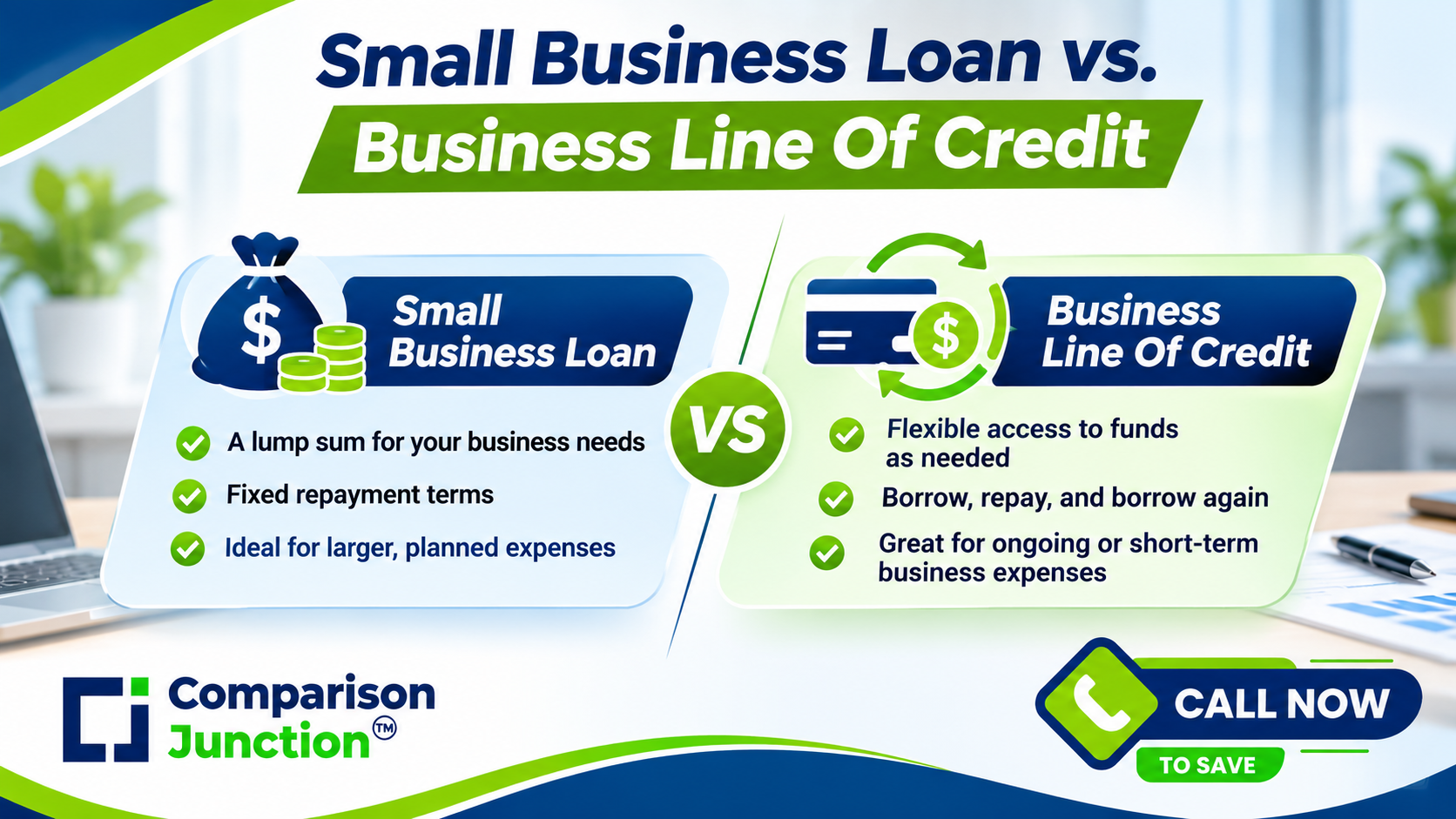
Running a small business often requires additional funding to manage expenses, purchase equipment, expand operations, or handle unexpected financial challenges. However, choosing the right financing option can be confusing. Two popular options are small business loans and business lines of credit.
Understanding the difference between a small business loan vs. business line of credit can help you make an informed financial decision. While both provide access to business funding, they differ in how money is received, repayment terms, interest rates, and flexibility.
Let's compare both financing options to help you determine which one best fits your business needs.
What Is A Small Business Loan?
A small business loan provides a lump sum of money that a lender gives your business upfront. You repay the borrowed amount, along with interest and applicable fees, through scheduled payments over an agreed period.
Business loans are commonly used for:
Purchasing equipment or commercial property.
Expanding business operations.
Hiring employees.
Renovating business premises.
Managing large one-time expenses.
These loans are suitable for business owners who know exactly how much funding they need and prefer predictable repayment schedules.
What Is A Business Line Of Credit?
A business line of credit is a flexible financing option that allows businesses to borrow money up to an approved credit limit whenever needed.
Unlike a traditional loan, you don't receive the entire approved amount upfront. Instead, you withdraw funds as necessary and generally pay interest only on the outstanding amount borrowed.
Common uses include:
Covering temporary cash flow shortages.
Purchasing inventory.
Managing seasonal expenses.
Paying unexpected bills.
Handling short-term operational costs.
A business line of credit is particularly useful for businesses with fluctuating cash flow requirements.
Small Business Loan vs. Business Line Of Credit - Comparison Table
Here's a quick comparison to understand how these financing options differ.
Comparison Factor | Small Business Loan | Business Line of Credit |
Funding | Lump sum | Withdraw as needed |
Interest | On outstanding loan balance | Generally on amount borrowed |
Repayment | Fixed installments | Depends on balance and agreement |
Credit Limit | Approved loan amount | Revolving credit limit |
Flexibility | Less flexible | More flexible |
Best For | Large investments | Short-term expenses |
Funding Access | Usually one-time | Multiple withdrawals |
Loan Term | Fixed repayment period | Revolving or renewable period |
Budget Planning | Predictable payments | Variable payments |
Advantages And Disadvantages Of Small Business Loans
Advantages -
Larger Funding Amounts - Depending on eligibility, businesses may qualify for substantial financing.
Predictable Payments - Fixed repayment schedules make financial planning easier.
Longer Repayment Periods - Certain loans offer extended repayment terms.
Business Growth - Ideal for major investments and long-term expansion.
Disadvantages -
Interest Costs - Borrowers must repay the principal along with interest and applicable fees.
Qualification Requirements - Lenders may require strong credit, business history, and financial documentation.
Less Flexibility - You generally receive the approved amount as a lump sum.
Repayment Obligations - Payments are due even when business revenue fluctuates.
Advantages and Disadvantages Of Business Lines Of Credit
Advantages -
Flexibility Withdrawals - Access funds whenever eligible expenses arise.
Pay Interest On What You Use - Interest is generally calculated on the outstanding borrowed balance.
Cash Flow Management - Helpful for covering temporary financial gaps.
Reusable Funding - Available credit may replenish as you repay, subject to the agreement.
Disadvantages -
Variable Interest Rates - Some lenders offer variable rates that can increase.
Additional Fees - Maintenance, annual draw or inactivity fees may apply.
Shorter Repayment Cycles - SOme credit lines require frequent payments or periodic renewal.
Overspeeding Risk - Easy access to credit can encourage unnecessary borrowing.
Small Business Loan vs. Business Line Of Credit - Pricing Information
Pricing is one of the most important factors when comparing financial options.
As of November 2026, approximate U.S. market pricing varies considerably by lender, creditworthiness, financial product and repayment terms.
Financing Option | Indicative Interest Rate |
SBA 7(a) Loans | 10 to 15% maximum rate range |
Traditional Bank Loans | Approximately 6% to 11% |
Online Business Loans | Approximately 14% to 99% APR |
Business Lines of Credit | Approximately 10% to 99% APR |
These figures are indicative market ranges, not guaranteed offers. SBA 7(a) rates are subject to program limits, while conventional financing rates depend on individual lender underwriting. Before accepting financing, compare the annual percentage rate (APR), origination fees, repayment schedule, collateral requirements, and total repayment amount.
Which Financing Option Should You Choose?
The right choice depends on your business goals and financial requirements.
Choose a small business loan if you need a significant amount of money for a specific investment, want predictable installments, and prefer a structured repayment plan.
Choose a business line of credit if you business experiences seasonal fluctuations, needs ongoing working capital, or requires flexible access to funds.
Ultimately, compare multiple financing offers before making your decisions.
Find Business Financing Options Near You
Looking for affordable business financing? Comparison Junction makes it easier to explore potential funding options.
Explore With UsSpeak To Our Financing Assistance Team
Call our team today at +1-844-678-6868 to clear all your doubts about the best fit for you.
Our team can help you understand financing options, compare potential offers, and identify the next steps toward finding suitable business funding.
Choosing between a small business loan and a business line of credit depends on how your business plans to use the funds. A traditional loan may be better for significant, planned investments, while a line of credit offers flexibility for ongoing operational expenses.
Before deciding, compare interest rates, fees, repayment terms, and eligibility requirements.
At Comparison Junction, our goal is to help business owners explore financing choices and make more informed decisions for their business growth.