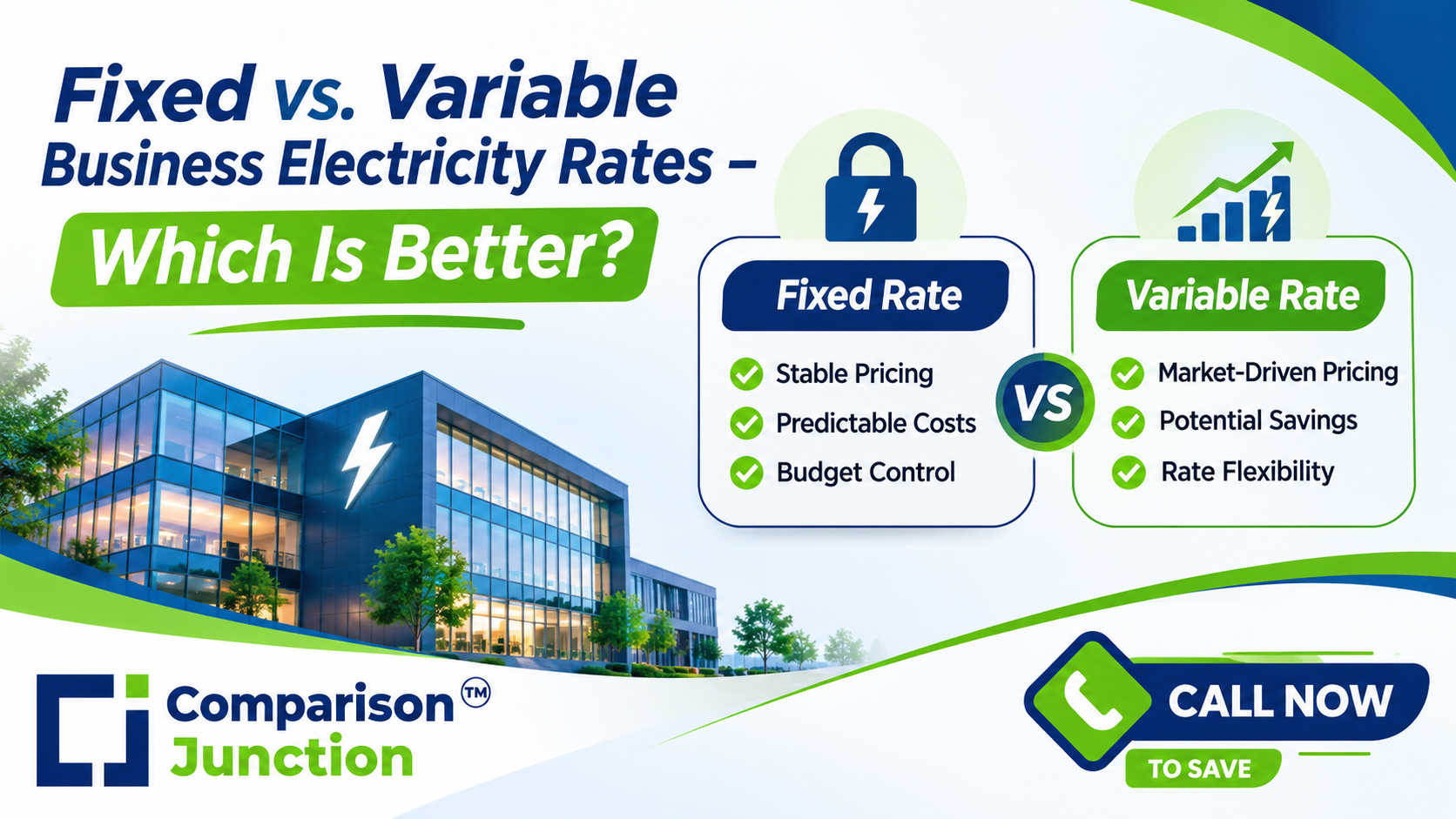
Choosing the right electricity plan can make a significant difference to your business's operating expenses. Whether you run a small retail store, manage an office, or operate a large commercial facility, understanding fixed vs. variable business electricity rates can help you control energy costs and make smarter financial decisions.
At Comparison Junction, we help businesses understand their energy options so they can compare available plans and choose an arrangement that fits their budget, usage patterns, and long-term goals. But which electricity rate is better for your business, fixed or variable? Let's compare the two options.
What Are Fixed Business Electricity Rates?
A fixed business electricity rate means your electricity supply rate per kilowatt-hour (kWh) stays the same throughout the agreed contract term, subject to the contract's terms and conditions.
This option is popular among businesses that value predictable expenses. If electricity market prices rise during your contract, your contracted supply rate generally remains unchanged.
Best for: Businesses with stable energy consumption, tight budgets, and a preference for predictable monthly expenses.
What Are Variable Business Electricity Rates?
A variable business electricity rate can change over time, depending on your supplier's pricing terms and market conditions. Rates may increase or decrease in response to wholesale energy prices, seasonal demand, and other market factors.
Variable plans may offer opportunities to benefit when energy prices fall. However, your electricity costs could also rise unexpectedly, making monthly budgeting more challenging.
Best for - Businesses comfortable with market fluctuations that want flexibility and the potential to benefit from lower electricity prices.
Fixed vs. Variable Business Electricity Rates - Comparison Table
Feature | Fixed Rate | Variable Rate |
Electricity supply rate | Generally stays constant during the contract | Can change over time |
Monthly budgeting | More predictable | Less predictable |
Protection from price increases | Usually, during the fixed term | Generally not guaranteed |
Benefit from market price drops | Usually limited during the contract | Potentially available |
Contract flexibility | May include cancellation fees | Depends on the plan |
Financial risk | Lower rate volatility | Greater rate volatility |
Ideal business type | Budget-conscious businesses | Businesses comfortable with changing prices |
Remember that your total electricity bill may still change under either plan because of usage, delivery charges, taxes, fees, and other applicable adjustments.
Pros And Cons Of Fixed Electricity Rates
Advantages -
Predictable Energy Costs - A consistent supply rate makes it easier to forecast operating expenses.
Protection Against Rising Prices - You can avoid market-driven increases to your contracted supply rate during the fixed term.
Simplified Budgeting - Stable pricing supports cash-flow planning and financial forecasting.
Greater Cost Certainty - Fixed pricing can help businesses plan future expenses with more confidence.
Disadvantages -
Limited Savings When Prices Fall - Your contracted rate may remain higher than newly available market offers.
Potential Cancellation Fees - Ending a contract early may involve charges.
Contract Restrictions - Some plans include minimum terms, renewal provisions, or other conditions that limit flexibility.
Pros And Cons Of Variable Electricity Rates
Advantages -
Potential Savings - You may benefit when market conditions lead to lower electricity rates.
Possible Flexibility - Certain variable plans offer shorter commitments or easier switching, depending on their terms.
Market Responsiveness - Your rate may adjust as energy prices change.
Disadvantages -
Unpredictable Bills - Rising rates can increase your operating expenses.
Budgeting Challenges - Frequent price changes can complicate financial planning.
Exposure To Market Volatility - Seasonal demand, supply disruptions, and wholesale price spikes may affect your costs.
Business Electricity Pricing - What Should You Expect To Pay?
Business electricity pricing varies by state, utility territory, supplier, contract length, consumption level, and market conditions. Your final bill may include supply charges, delivery charges, taxes, and other applicable fees.
According to the U.S. Energy Information Administration, the average commercial electricity price in 2025 was 13.41 cents per kWh nationwide. This is a historical national average, not a guaranteed rate for a new business contract. Actual offers may differ significantly by location and business requirements.
For example, a business using 5,000 kWh monthly at a supply rate of $0.12 per kWh would pay $600 for its energy supply before delivery charges, taxes, and other fees.
When comparing plans, review -
Price per kWh - Compare the actual supply rate offered by each provider.
Contract Duration - Check the length of fixed-rate agreements and renewal terms.
Additional Charges - Look for monthly fees, demand charges, and early termination penalties.
Usage Requirements - Confirm whether your business qualifies for the advertised rate.
Find Business Electricity Rates By ZIP Code
Ready to compare fixed and variable electricity plans for your business? Comparison Junction makes it easier to explore available energy options based on your location.
Explore With UsConsult Our Comparison Junction Specialist
Call our team today at +1-844-678-6868 to discuss your business electricity options and find a plan that works for your budget.
Which Business Electricity Rate Should You Choose?
A fixed rate may be the better choice if predictable expenses and protection against supply-rate increases are your priorities. A variable rate may suit your business if you can handle changing prices and want the opportunity to benefit from favorable market conditions.
Before signing a contract, compare the complete pricing structure, contract conditions, and expected energy usage rather than focusing only on the advertised rate.
At Comparison Junction, we help simplify the comparison process so you can make a more informed decision for your business.